Keep Your Love Alive is a 501(c)(3) tax exempt organization

IBlockedMyParents.com
A space where the voices and images of adult children who have opted to go "No Contact" with their parents will be heard!
A division of Keep Your Love Alive.
"I had no choice but to block my parents..."
I declare my independence from the family and relationships that once defined me. After years of enduring criticism disguised as care, control masked as love, and expectations that eroded my spirit, I have chosen, out of absolute necessity, to block my parents, extended family, and all who disrupt my hard-won tranquility. This decision was not made lightly or in anger, but in the clear light of self-preservation. I declare that my mental health is sacred. The constant anxiety, guilt, and emotional exhaustion I carried for decades no longer serve me. By severing digital and emotional ties, I have created a safe space where my voice can finally rise above the noise of the past. No more obligatory calls that reopen wounds. No more performative affection that demands my silence.
Today, I affirm my right to peace. My mornings are mine, filled with quiet reflection, creative work, and genuine connections chosen, not inherited. I grieve what could have been, yet I celebrate what is: a life rebuilt on boundaries, therapy, and self-compassion. I declare that protecting my light is not selfishness; it is my fundamental duty. To anyone who may judge this act, know this: I owe my peace to no one but myself. From this day forward, I walk forward unburdened, whole, and free.


If you are having thoughts of suicide or have thought about harming yourself or others, please call 911 or call or text 988 which is the Suicide and Crisis Hotline or chat online at 988lifeline.org to connect with a skilled, compassionate crisis counselor. Regardless of which side of this issue you might be on, no one should walk it alone.
The Founders of this non-profit believe in giving every person a voice on every side of an issue!
IBlockedMyParents.com is designed for young adults, who for a number of reasons have opted to restrict access to family they feel are toxic, narcissistic or otherwise harmful to their own peace. It is a place where commonalities can be observed and even shared... it is a place for self-reflection and ultimately to consider, "What do I /we do next?"


CanceledParents.org is the other side of the coin... It is a dedicated resource and community for parents whose adult children have chosen to go “no-contact.” This is their site... a place where their voices are heard, where they can share experiences, find validation, and connect with others navigating the same painful reality. The site also includes a direct link back to this website, reflecting a shared commitment to letting both sides of the conversation be heard.
KeepYourLoveAlive.org is the non-profit organization whose goal is to bring the 2 sides together. In many cases, there are external factors that contribute to our actions as well as the responses to those actions. Tread carefully friends... you may just learn a thing or two about your parents... and about yourself. Shouldn't that be our collective goal... to LEARN about one another while finding a path to reconciliation?
True conviction is proven by the courage to never silence others...
Full Disclosure: The founders of Keep Your Love Alive started this nonprofit after their adult child went no-contact in April 2025. It began strictly from the parents’ perspective. After some reflection, self-discovery, community feedback, and personal tragedy, we pivoted. To drive real change and reconciliation, our hope is that by providing this site, where adult children's voices are represented, both sides can gain a bit more clarity of the other. Most people only hear their own side... that's how political parties like it... that's how network media operates... that's how social media algorithms work...
After exploring this site, we invite you to visit CanceledParents.org. We have the same invitation there for parents... to come on over here so they too can gain another perspective. Parents may not like what they find here, just as adult children may not like what they see there. Maybe it's time we question the narratives... At least put them to the test.
If we are firm in our beliefs, then what are we afraid of by letting others speak?
There are 2 other links on this website...
!Explicit Language Warning!
Some videos and blog posts may contain explicit language.
Content added weekly!

We are at a precipice in our nation's history... and our voices will not be silenced! Hear, in our own words how we feel and the reasoning behind our actions...
"It's this narcissistic process where they think if I make you feel broken enough, or failed enough then that means that I'm smart enough to recognize so you should see that I have all the right answers..."

"It is always the parent's responsibility to mend that relationship... it is never the child's responsibility no matter how old they are..."
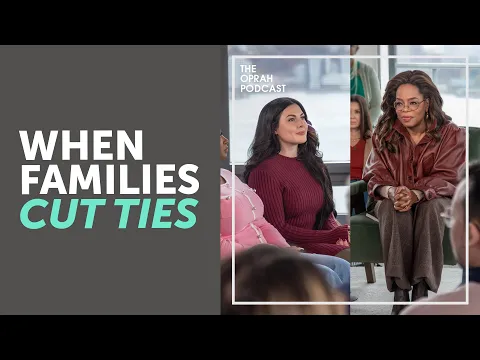
"If you are the type pf person who continues to go no contact with your DYING family member even after the hospice nurse calls you and says their final dying wish is to talk to you then I think that's totally fine!


"Even if your goal was to go "no contact" with just 1 or 2 family members, even other people who were harmed by these narcissistic family members will be angry with you..."
"When narcistic parents lose the scapegoat, they panic emotionally... they have anger, criticism and they have all of these things that they need to project and they wonder where it should be directed"
"You can honor your mother and father without having a relationship... respecting your mother and father doesn't mean agreeing to be abused by them..."
"The narcissist always needs this supply of attention so narcissist needs this admiration so they look for people who will supply it..."
"Parent and child estrangement doesn't just happen in the spur of the moment. It is usually the final stage of a long, slow relational breakdown where one person finally says I can't keep doing this..."
"Narcissistic mothers covertly shame and damage their own children in order to keep them trapped in a box of control and attempt to look good in the process... garnering all kinds of support and attention..."
-Dr. Todd Bernston
-Contributor at 7:07
-Jerry Wise, Family Systems Coach
-Dr Daniel Fox
-Dr Ramani
-Oprah Contributor at 1:00:20
-Barbara Hefferman
-Kevin, The Royal We
-Combined Statement at 35:40
1) Did I go too far?
I may have: Going too far can mean crossing into permanent estrangement or public accusations without room for repair, which often escalates family pain and leaves lasting regret. Many people later realize their initial grievances, while valid, were amplified into total rejection that harmed their own well-being and support network. Reflection shows that boundaries are healthy, but total cutoff frequently exceeds what the original issues warranted.
Not likely: Sometimes decisive distance is necessary to escape genuine abuse or toxicity, and questioning “too far” can be a form of gaslighting yourself back into harm. Protecting my peace after repeated violations is not excessive, it is self-preservation. Many who maintain limited or no contact report improved mental health and clarity once the fog lifts.
2) If not for social media, would I have such a strong stance?
No: Social media tends to intensify emotions, provide scripted language for grievances, and reward dramatic narratives with likes and validation that a private reflection would never generate. Without constant reinforcement and comparison, many family conflicts would remain manageable disagreements rather than ideological battles. The platform dynamics themselves often manufacture stronger stances than personal experience alone would justify.
Yes: Core issues with parents usually predate social media. The internet simply gave language and community to name problems that already existed. Many people reached similar conclusions through private therapy or direct experience long before posting. Social media can illuminate patterns but does not create the underlying pain.
3) How will my social circle feel about me if I pull back some of my claims?
They'll support me: A genuine circle values honesty and growth over rigid ideology. Admitting nuance often earns respect and deeper connections rather than rejection. Many friends quietly feel relief when someone steps back from extremes. Authenticity tends to strengthen real relationships while filtering out performative ones.
Live by cancel culture, die by cancel culture: Certain activist or therapy-influenced circles treat any softening as betrayal or internalized oppression, leading to social ostracism or accusations of complicity. The fear is rational because public backtracking has cost people friendships and community standing. Groupthink can punish independent reevaluation harshly.
4) Do I know any young adults who have wronged their parents or is it always the parents who are the transgressors?
Young people don't promote their own cruelty: Plenty of adult children have engaged in selfishness, financial exploitation, emotional manipulation, or outright neglect of aging parents. Stories surface regularly in family therapy and elder-care settings. Assuming parents are always the villains ignores human fallibility across generations. Balanced observation reveals wrongdoing flows both directions.
It's usually the parents: Cultural and historical patterns show parents hold greater power, resources, and responsibility during formative years, making their transgressions more impactful. While exceptions exist, systemic accounts of estrangement disproportionately trace back to parental failures in empathy or boundaries. Focusing only on exceptions can minimize the primary dynamic.
5) Am I really allowed to have “Diversity of Thought”?
Yes: True diversity of thought requires tolerating disagreement even within progressive or therapeutic spaces. Many people quietly hold mixed views without public proclamation and still maintain relationships. Intellectual freedom includes the right to reject ideas that we disagree with even if our views are unpopular within our social circle.
Not on moral issues: Certain moral issues genuinely have clearer ethical lines, and demanding “diversity” on settled harms can enable injustice. Social movements often require unified stances for effectiveness. Nuance is possible privately, but public discourse sometimes benefits from clearer positions.
6) Has my natural empathy been exploited for political or ideological reasons?
Possibly: Empathy is a powerful lever. Movements and influencers frequently frame family issues in ideological terms to recruit and retain followers, channeling natural compassion into broader narratives. This can lead people to adopt stronger positions than their personal evidence supports. Recognizing exploitation restores agency.
Not likely: Naming systemic patterns (abuse, generational trauma, societal expectations) is not exploitation but illumination. Empathy was already present and now better directed. Dismissing this as manipulation can be a way to avoid uncomfortable truths. Awareness movements have helped countless people validate real experiences.
7) When a friend shares with me that they are going “no contact” with their parents, am I sad for them or am I glad that we now have more in common?
There might be something to this: Feeling glad for shared identity over genuine sorrow reveals tribalism and a loss of empathy for the full family system. Healthy responses involve curiosity about all sides and sadness for fractured relationships. Prioritizing narrative alignment over nuance suggests ideological capture.
This trivializes the issue a bit: Shared experience can bring relief and validation without negating sorrow. It is human to feel connection in mutual struggle. One-sided stories are common because the hurt person reaches out first. Caution about the other side is wise when patterns of denial are known.
8) If I am so “healthy” now with my newfound virtuous positions, why does it feel like I am in a silo with nearly my entire family?
You reap what you sow: True health and growth typically expand healthy relationships rather than resulting in isolation from family. Persistent loneliness signals that the new framework may prioritize ideology over connection. Many people report regret when “healing” leads to smaller worlds. Silos often indicate over-correction.
Families can be the source of dysfunction: Choosing peace sometimes requires distance. Feeling isolated may reflect their unwillingness to grow rather than personal failure. Many find new chosen family that aligns better with healthier boundaries.
9) Am I angrier at my parent’s initial transgressions or am I angrier about their reaction to my accusations?
Their reaction: Anger at my parent's reaction might reveal that the original issues were addressable, but their escalation only hardened my position especially since I took to social media to promote their "wrong doings".
Their "original sin" is still worse: Defensive reactions frequently confirm and compound the original harm, revealing deeper lack of accountability. Anger at the response is valid when it shows the parent prioritizes image over repair. Both layers matter, but the pattern of denial is often the stronger ongoing injury.
10) Sometimes it feels things have gone too far to go back… Is this what the “point of no return” feels like?
Irreconcilable differences: Estrangement can calcify over years, making reconciliation emotionally exhausting or practically impossible after public declarations and lost trust. The sunk-cost feeling is real and often signals permanent change. Many reach acceptance that some bridges cannot be rebuilt.
It could start with a phone call: Families have reconciled after decades of silence when both sides show willingness... the “point of no return” is often fear rather than fact. Time and life events frequently soften positions. Hope for repair remains possible if pride is set aside.
11) If my problem is with my parents, why have I blocked everyone else in the name of “self-care,” “healing” and “peace”?
They're probably going to side with my parents: Broad blocking suggests the issue may be generalized avoidance or ideological purity rather than targeted boundaries. True self-care preserves functional relationships while limiting toxic ones. Over-application indicates possible overreach or echo-chamber influence.
Guilt by association: Trauma or enmeshment can make multiple family members triggering... extending protection prevents indirect harm. Self-care sometimes requires wide nets initially for safety. Individual circumstances justify individualized boundaries.
12) At what point do I take full responsibility for my life as an adult instead of blaming my parents?
The moment I became an adult capable of independent choices, typically 18 or whenever I left home, I own my life. Continued blame keeps me stuck. Growth starts when I stop outsourcing accountability. I guess I made my bed...
Only after I've fully processed the lasting effects of their actions (or never completely, if the harm was severe). Denying parental responsibility ignores real formative damage that shapes adult outcomes.
13) Have I become the very thing I swore against… the “groomer & abuser”?
I guess it's possible! Going "no contact" with family through loaded language and one-sided narratives can mirror manipulative dynamics one once opposed. Ideological certainty passed to the next generation risks repeating cycles of control. Honest self-examination prevents becoming what was hated.
I think not! Setting boundaries against actual harm is protection, not grooming or abuse. The comparison often minimizes real differences in power and intent. Protecting the vulnerable differs fundamentally from exploitation.
14) What would my 10-year-old self think if she got in a time machine and visited me in 2026 for an hour?
Lost innocence: The child version often valued family connection, simplicity, and forgiveness more than adult ideological frameworks. Seeing isolation or anger might disappoint or confuse her. It's hard to imagine her being too excited about what her future looks like...
She grew up! The 10-year-old lacked full context of harm or maturity to judge adult decisions. She might admire the courage to set boundaries she could not. Growth sometimes means outgrowing childhood naivety.
15) I thought “therapy” would make my life better… but I am lonelier than I’ve ever been despite the social gatherings… By the way, when does therapy end?
I'm a cash cow: Therapy tends to hyper-focus on personal narrative at the expense of broader relationships, creating loneliness masked by activity. Financial incentives do exist for ongoing sessions... Re-evaluating progress and defining an "exist strategy" should always be the goal! Ask need to honestly ask myself, "Am I better off now than when I started therapy and how do I measure that?"
The more damage done the longer it takes to heal: Healing is nonlinear, and temporary loneliness can precede deeper fulfillment. Good therapists aim for independence, not dependence. Social gatherings do not equal intimate connection. Deeper work takes time.
16) Will I be on these SSRIs forever?
For: Long-term use carries risks, side effects, and questions about underlying issues unaddressed by medication alone. Many successfully taper with lifestyle, therapy, and support when root causes improve. Dependence is worth regular medical review.
Against: For some, medication is a necessary ongoing tool like insulin for diabetes, restoring function without shame. Decisions belong to patient and doctor based on individual response. Stigma around long-term use can discourage needed treatment.
17) Can others have opposing political views on POLICY, without me labeling them a racist, narcissist, sexist, bigot, Christian Nationalist, fascist, or Extreme MAGA?
Yes: In fact, let me list policy disagreements where healthy debate from opposing sides is okay...
No: Some treat certain policy positions as proof of those traits by definition. Under that view, opposing the “correct” policy automatically warrants the label, so disagreement cannot exist without it.
Bonus Consideration: What would my inner circle say or do if I opposed their position(s)?
18) My recent influences helped me find the “courage” to speak my mind openly and go "no contact" with various people... I probably would have come to this conclusion on my own, right?
No... I'm largely echoing a ready-made narrative. Adopting the group’s preferred language and discovering courage only once the trend made it safer points more to external influence than pure independence. Genuine free thinking tests new orthodoxies with the same skepticism it once applied to the old ones. Honest self-reflection is the surest way back to authentic autonomy.
Evolution of thought is part of free thinking: Exposure to new ideas and communities can awaken genuine insight previously suppressed. Courage often requires support... that does not negate independent judgment.
19) At this rate, what will my life look like in 10 years? 20 years? 30 years?
Not good: Continued isolation, medication dependence, and ideological silos risk deeper loneliness, regret, and health issues if patterns persist without course correction. Many in similar paths report mid-life reevaluation and reconnection attempts. Projecting forward encourages intentional change.
It'll be better: Sustained boundaries and chosen community can yield greater peace, authenticity, and purpose even without biological family. Growth trajectories vary and many report improved lives after initial difficult years. The future remains open to positive evolution.
20) What would my parents have to do for me to consider reconciliation with them?
They would need to disavow their religion and politics for me to even consider it. Then they would have to admit to all they did wrong raising me along with admitting to their shitty ideology.
I doubt we'll ever see eye to eye on anything substantial, but for peace to take place they will need to be willing to have open and honest discussion.
***I refuse to engage with manipulative, narcissistic people... so true reconciliation is NOT going to happen!
21) From my parent's perspective, what would I have to do for there to be reconciliation?
Change my lifestyle. They have told me repeatedly that they disagree with my lifestyle and the decisions I have made. They have never supported me so I don't expect them to now!
Open dialogue... They claim they just want to talk but I see beyond their manipulation.
22) What would be the disadvantage of working on my problems with my parents in private... and not out on the public stage?
Everything! I am all about "community" and my friend circle, especially those on Facebook need to share in my journey of getting to the roots of my pain as I continue my transformative journey.
Probably nothing. But taking it public gives me the affirmation that I need.
23) Has my decision to cut my parents off truly made my life better? Or am I just an angry, principled person?
It's better! It took me years to "break the cycle" and I have a new family... people who see me as the beautiful person I am! If my parents would appreciate my principles and try to embrace them, they could be part of my life. But they are set in their narrow-minded ways while I choose to remain free.
Honestly? It's a struggle. I wish I hadn't gone as far as I did, but what's done is done. The ball is in their court now.
23 Questions That Keep Me Awake At Night...
(Opposing Views on Each Issue)
Your Personal Testimonies Here!
You can speak to your reconciliation... your journey... or even double down on your decision to cut your parents off. This is YOUR SPACE. Your words will not be edited or in any way muted. You can stand in solidarity with other adult children on the same path and even provide unique insight to the parents who will undoubtably visit this site from this non-profit's sister site, "CanceledParents.org". Or you may even want to "come clean" and explain your regret for how you handled things. You have the mic! Video links or blog posts are welcome. Keep in mind... The type of story you may share don't often hit the algorithm of parents whose kids have gone "no contact"... so this is your chance to speak to them! Just fill out the form at the bottom of this page. You can even use the submission form as your entry. If sharing a video, a YouTube link is best. Just let us know how you want to proceed.
We fully appreciate that "cancel culture" is real and that if you make one misstep, you too, can be cancelled. If requested, your video post or blog entry can be made anonymous. If no restrictions are requested, the use of content will be at the sole discretion of the Executive Director of Keep Your Love Alive. You may however, at any time, request your content be removed. We ask for 48 hours for this request to be granted.
NOTE: The first submission deadline is September 26th in time for an October 1st rollout.
Contributor #1
Contributor #2
Contributor #3


Your dollars matter! Your STORY matters! Your passion for our mission matters! Here's what we need from you!
Financial support to help us present BOTH sides of what we all would agree is the greatest heartbreak of our lives… You are HERE... your VOICE is heard... this can lead us all to a place of reconciliation... Partner with us by clicking the Donate Now button at the top of this page.


Video testimonials… YOUR STORIES to be featured right here on our website. If being on camera is not your thing, then perhaps a new Blog Entry that speaks to your experience, professional perspective or even opposing points of view. No filters, no rules... just YOU!
Share our content. Too many of us have felt the pain & emptiness due to our decision to cut everyone off. The more you share our content the more likely others will make their way to this site. Maybe they can start to make sense of what happened and the path forward...
NOTE: All donations made to Keep Your Love Alive through any of the 3 websites will go towards the operating budget of the non-profit as a whole. Even though there are multiple sides to this epidemic, in which everyone gets a mic, it is ONE STORY that is being told.
7 Things That Just Don't Add Up
WARNING: Entering this page is easy... Staying a while is not. Viewing the content will force a person to take an honest look at the narratives they've heard and the potential motives of the people behind those narratives. Not recommended for the easily triggered. Maybe just skip this for now.
People don't fake being broken... they fake being okay...
The song below sort of speaks to that.

FREE Resource Center
We offer a comprehensive list of free resources to support every family, because seeking help is a sign of strength, not weakness!
Specific to Family Estrangement


Specific to Domestic Abuse
Specific to Mental Health


We'd love to hear from you...
There is unbelievable freedom in NOT carrying this type of burden yourself...


Copyright © 2025 Keep Your Love Alive
All Rights Reserved.
Tax ID: 39-3602488
Powered by:
Wordsmith Performance Management, LLC
Disclaimer: The information provided on this website is for general informational purposes only and does not constitute legal, medical, or professional advice. We are not licensed or trained legal or medical professionals. Any content, resources, or guidance offered is not a substitute for professional advice from qualified attorneys, doctors, or other licensed professionals. We strongly recommend that you consult with your own legal, medical, or other relevant professionals before making decisions or taking actions based on the information provided here. Keep Your Love Alive, its Founders, Board Members, Employees, and Volunteers assume no liability for any actions taken in reliance on the information contained on this website or in any Keep Your Love Alive sanctioned social media post, social media comment, private message, phone conversation, virtual meeting (one on one or in a group setting), or email correspondence.

